


Visit Tsavo National Park, Kenya
Tsavo National Park is one of Kenya’s most iconic safari destinations and one of the largest protected wilderness areas in Africa. Located in southeastern Kenya, between Nairobi and Mombasa, Tsavo is famous for its vast landscapes, large elephant herds, diverse wildlife, volcanic scenery, dramatic rivers, and the legendary lions of Tsavo.
Tsavo National Park is made up of Tsavo East National Park and Tsavo West National Park, which together form the vast Tsavo ecosystem covering approximately 22,000 square kilometres. Tsavo East covers about 13,747 square kilometres, while Tsavo West covers approximately 9,065 square kilometres. The two parks are separated by the Nairobi–Mombasa highway and railway but remain part of the same wider ecological landscape.
A safari in Tsavo offers a different experience from the more heavily visited safari destinations of Kenya. The park combines enormous open spaces with volcanic hills, lava flows, springs, rivers and woodland, creating excellent opportunities for wildlife viewing, photography, bird watching and wilderness exploration.
Whether you are planning a short Tsavo safari from Mombasa or Diani Beach, a Kenya safari from Nairobi, or a longer itinerary combining Tsavo with Amboseli, the park offers an exceptional opportunity to experience Kenya’s wildlife and landscapes.
Featured Tsavo National Park Safari Packages


Tsavo East and Tsavo West National Parks
The two sections of Tsavo have distinct landscapes and safari experiences.
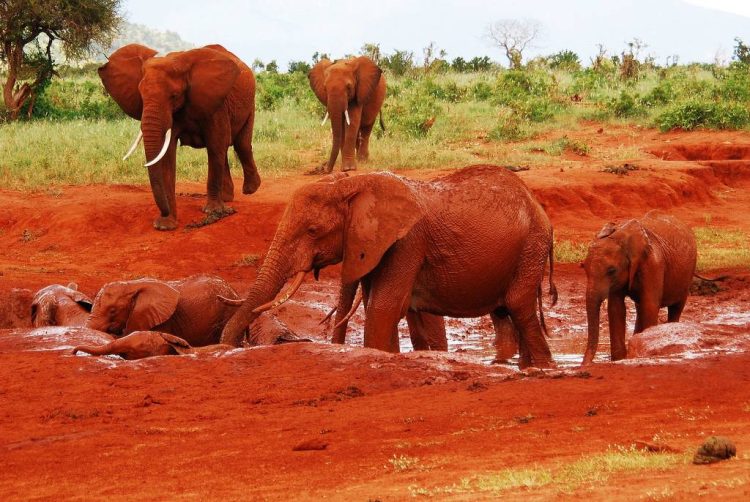
Tsavo East National Park is the larger and more open section of the park. It is characterised by expansive semi-arid plains, red earth, bushland, rivers and striking geological features. The park is particularly famous for its red elephants, whose appearance is enhanced when they cover themselves in the park’s distinctive red soil.
Tsavo West National Park is more varied and rugged, with volcanic hills, lava flows, springs, rocky landscapes and areas of dense vegetation. Its best-known attractions include Mzima Springs, Shetani Lava Flow and the Ngulia Rhino Sanctuary. KWS describes Tsavo West as a landscape of springs, lava flows, savannah and dramatic volcanic scenery.
Visiting both parks allows you to experience the contrasting landscapes and wildlife habitats that make the Tsavo ecosystem so distinctive.
Why Visit Tsavo National Park?
Tsavo is a destination for those looking for expansive wilderness, wildlife diversity and dramatic scenery.
Some of the highlights of a Tsavo National Park safari include:
-
Large herds of African elephants
-
The famous red elephants of Tsavo East
-
Lions and other large predators
-
Buffaloes, giraffes, zebras and antelopes
-
Leopards and other carnivores
-
Mzima Springs and its hippos and crocodiles
-
Shetani Lava Flow and volcanic landscapes
-
Ngulia Rhino Sanctuary
-
Galana River and Lugard Falls
-
Yatta Plateau
-
Mudanda Rock
-
Aruba Dam and other wildlife water sources
-
Excellent bird watching
-
Morning, afternoon and full-day game drives
-
Selected guided walking and special wildlife experiences
Tsavo is also historically famous for the Man-Eaters of Tsavo, the two maneless lions associated with attacks on workers during construction of the Kenya–Uganda Railway in 1898. The story has become an important part of Tsavo’s history and heritage.
Wildlife in Tsavo National Park
Wildlife is one of the main reasons why tourists visit Tsavo.
The enormous size and varied habitats of the Tsavo ecosystem support a wide range of mammals. Depending on the area visited, season and conditions, visitors may encounter elephants, lions, buffaloes, leopards, giraffes, zebras, hippos, crocodiles, warthogs, impalas, gazelles, kudu, hartebeest, waterbucks and other antelope species.
Tsavo East’s open landscapes can provide excellent conditions for viewing large animals, while Tsavo West combines wildlife viewing with more varied volcanic and mountainous scenery.
The Red Elephants of Tsavo
One of the most distinctive sights on a Tsavo safari is the park’s famous red elephants.
The elephants are not naturally red. Their appearance comes from the reddish soil and dust of Tsavo, which elephants frequently cover themselves with. Large elephant herds moving through the red landscape are among the most recognisable scenes in Tsavo East.
For photographers and wildlife enthusiasts, the combination of elephants, red earth and open savannah creates some of the most distinctive safari scenery in Kenya.
The Big Five in Tsavo
Tsavo is home to the Big Five: elephant, lion, buffalo, leopard and rhinoceros.
Elephants are particularly prominent throughout the Tsavo ecosystem, while lions are closely associated with the park’s history. Buffaloes are also widely distributed, and leopards may be encountered in suitable habitats, although they are naturally more difficult to spot.
Black rhinos are protected in areas such as the Ngulia Rhino Sanctuary in Tsavo West, where conservation efforts focus on one of Africa’s most endangered large mammals.
Wildlife sightings are never guaranteed, because animals move freely through a huge natural ecosystem. Our experienced guides use their knowledge of tracks, habitats, water sources, and animal behaviour to increase your opportunities for game viewing.
Top Attractions in Tsavo National Park
Tsavo combines wildlife with some of Kenya’s most impressive natural and geological attractions.
Mzima Springs
Mzima Springs is one of the best-known attractions in Tsavo West.
Clear groundwater emerges from beneath the surrounding volcanic landscape to create a series of pools and streams. The springs attract hippos, crocodiles, birds and other wildlife, while the surrounding vegetation creates a striking contrast with the drier landscapes elsewhere in Tsavo West.
The springs are particularly popular with visitors interested in nature, wildlife photography and bird watching. KWS identifies Mzima Springs as one of Tsavo West’s signature attractions.
Shetani Lava Flow
The Shetani Lava Flow is a dramatic volcanic landscape in Tsavo West.
The dark lava formations stretch across the landscape and provide a striking contrast with the surrounding savannah. Nearby lava formations and caves add to the geological character of the area.
The name “Shetani” means “devil” in Swahili and is associated with traditional stories surrounding the emergence of the lava.
Ngulia Rhino Sanctuary
The Ngulia Rhino Sanctuary is located in Tsavo West near Ngulia Hill and forms part of the conservation story of the Tsavo ecosystem.
The sanctuary protects black rhinos, which are endangered and difficult to encounter in the wild. Rhino viewing can therefore be a particularly meaningful component of a Tsavo West safari.
Galana River
The Galana River is one of the most important watercourses in Tsavo East.
Its waters support wildlife in an otherwise dry landscape, making the river and surrounding areas valuable locations for wildlife viewing. Elephants, buffaloes, hippos, crocodiles and other animals may be seen around suitable water sources.
Lugard Falls
Lugard Falls is one of Tsavo East’s most recognisable geological attractions.
Rather than being a conventional waterfall, Lugard Falls consists of a series of rapids and sculpted rock formations along the Galana River. Erosion has created unusual shapes in the rocks, making the area particularly interesting for photography and sightseeing.
Yatta Plateau
The Yatta Plateau is another remarkable geological feature of Tsavo East. KWS describes it as the world’s longest lava flow, creating a spectacular feature across the park’s landscape.
Mudanda Rock
Mudanda Rock provides an elevated viewpoint over the surrounding Tsavo East landscape.
A natural water catchment below the rock can attract wildlife, particularly during dry periods. The combination of elevated scenery and wildlife activity makes Mudanda Rock a popular stop on game drives.
Aruba Dam
Aruba Dam is an important water source in Tsavo East and can attract wildlife during dry periods. Animals such as elephants, buffaloes, zebras, waterbucks, warthogs and various antelope species may be seen around water, depending on seasonal conditions.
Things to Do in Tsavo National Park
A Tsavo safari can include several activities depending on the park section, itinerary, accommodation, and applicable park regulations.
Game Drives

Game drives are the main activity in Tsavo National Park.
Morning game drives offer opportunities to see wildlife when temperatures are cooler and many animals are active. Afternoon drives provide another opportunity to explore the park, while full-day game drives allow visitors to travel farther and spend more time exploring different habitats.
During game drives, visitors may encounter elephants, buffaloes, lions, giraffes, zebras, antelopes, warthogs, hippos, crocodiles and numerous bird species.
Tsavo’s enormous size means that game drives are as much about experiencing the wilderness and landscape as they are about individual wildlife sightings.
Bird Watching
Tsavo is an excellent destination for bird enthusiasts, with a wide variety of habitats supporting numerous bird species.
Depending on the location and season, bird watchers may see ostriches, storks, kingfishers, eagles, vultures, guinea fowl, starlings, shrikes, sandgrouse and many other species.
Mzima Springs and the riverine areas are particularly attractive for birding because water and vegetation provide important habitats for birds and other wildlife.
Nature Walks
Guided nature walks provide a different way to experience the Tsavo ecosystem.
Walking allows visitors to concentrate on smaller details that can easily be missed during a vehicle safari, including animal tracks, plants, insects, birds and signs of wildlife activity.
Walking activities must follow park regulations and are conducted in appropriate areas with authorised guides or rangers.
Hiking and Scenic Exploration
The volcanic and rugged landscapes of Tsavo West provide opportunities for scenic exploration and selected hiking experiences.
The hills, lava formations and viewpoints offer a different perspective from a traditional game drive and are particularly appealing to travellers interested in landscapes and photography.
Night Wildlife Experiences
We also organise night game drives and wildlife experiences that provide an opportunity to experience Tsavo after dark.
Nocturnal animals become active after sunset, while the absence of daylight reveals a completely different side of the wilderness. Night game drives are among the special activities done at Tsavo West.
Tsavo East vs Tsavo West: Which Part Should You Visit?
Tsavo East and Tsavo West are connected ecologically but offer noticeably different safari environments.
| Tsavo East | Tsavo West |
|---|---|
| Approximately 13,747 km² | Approximately 9,065 km² |
| More open and semi-arid | More rugged and volcanic |
| Famous for red elephants | Famous for Mzima Springs |
| Galana River | Mzima Springs |
| Yatta Plateau | Shetani Lava Flow |
| Lugard Falls | Ngulia Rhino Sanctuary |
| Mudanda Rock | Ngulia Hills and volcanic scenery |
| Strong focus on open-country game viewing | Wildlife combined with dramatic scenery |
Tsavo East is particularly appealing to visitors interested in vast open landscapes, elephants and classic savannah game viewing.
Tsavo West is especially attractive to travellers who want wildlife combined with springs, volcanic scenery, lava formations, hills and rhino conservation.
For a longer itinerary, visiting both Tsavo East and Tsavo West provides a more complete experience of the Tsavo ecosystem.
Tsavo National Park Safari Tours
Tsavo safari tours can be arranged as short wildlife trips or as part of longer Kenya safari itineraries.
Tsavo is particularly convenient for travellers arriving on the Kenyan coast. A safari can be combined with a beach holiday in Mombasa, Diani Beach or Malindi, while travellers arriving in Nairobi can include Tsavo as part of a southern or coastal Kenya safari.
Popular itinerary combinations include:
-
Tsavo East safari
-
Tsavo West safari
-
Tsavo East and Tsavo West safari
-
Tsavo and Amboseli safari
-
Tsavo and Mombasa safari
-
Tsavo and Diani Beach safari
-
Tsavo, Amboseli and Maasai Mara safari
-
Nairobi–Tsavo–Mombasa safari
The length of a Tsavo safari depends on the areas you want to visit, accommodation, transport arrangements and the wider Kenya itinerary.
Tsavo National Park Entry Fees
Park entry fees are an important part of planning a safari in Tsavo.
The current Kenya Wildlife Service tariff places Tsavo East and Tsavo West in Park Category A. The published rates are currently as below:
-
East African citizens: KES 1,000 per adult and KES 500 per child
-
Kenya residents: KES 1,350 per adult and KES 675 per child
-
African citizens: USD 40 per adult and USD 20 per child
-
Non-residents: USD 80 per adult and USD 40 per child
These rates apply to both Tsavo East and Tsavo West under the current KWS tariff.
Park fees and special activity charges can change, so you should confirm the applicable KWS tariff when booking your safari, especially for self-drive trips.
How to Get to Tsavo National Park
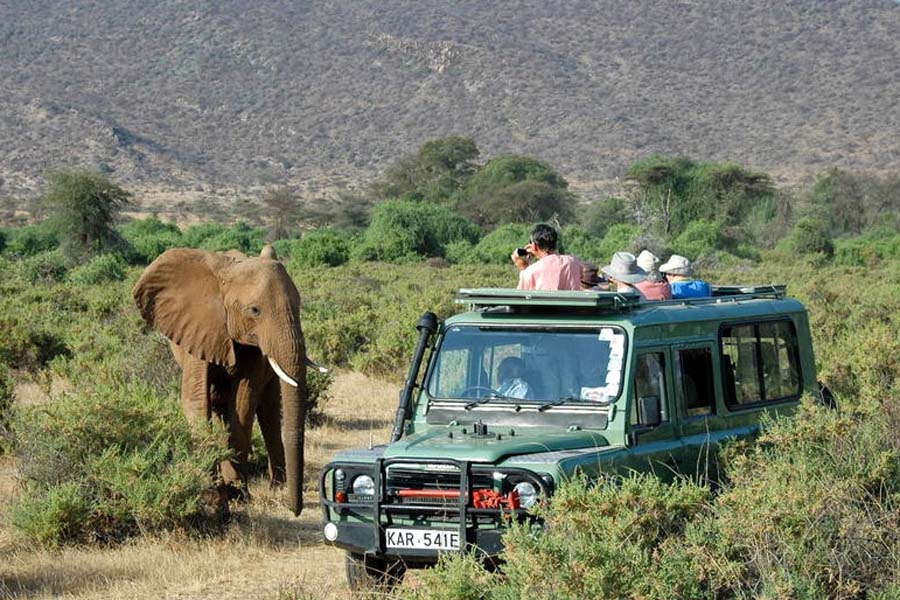
Tsavo is conveniently located along the main Nairobi–Mombasa transport corridor, making it accessible by both road and air.
Getting to Tsavo by Road
By road, Tsavo can be accessed from both Nairobi and Mombasa using the Nairobi–Mombasa highway.
For Tsavo East, major access points include Voi, Bachuma, Manyani, Buchuma and Sala gates. KWS lists Voi, Bachuma and Manyani among the principal access points from the Nairobi–Mombasa highway.
Tsavo West can be accessed through gates including Mtito Andei, Maktau, Mbuyuni, Jipe, Ziwani and Chyulu, depending on the travel route and safari itinerary.
Getting to Tsavo by Air
Travellers can also fly into airstrips serving different areas of the Tsavo ecosystem.
Tsavo East has airstrips including Voi and Ithumba, while other airstrips serve different sections of the wider park ecosystem.
Scheduled and charter flights can be particularly useful for travellers combining Tsavo with other safari destinations or looking to reduce long road transfers.
Where to Stay in Tsavo National Park
There is a wide range of accommodation in and around Tsavo, from luxury tented camps and safari lodges to mid-range properties, campsites and basic accommodation.
Tsavo National Park accommodation can be selected according to budget, location and the type of safari experience you want.
Luxury Accommodation
Luxury safari accommodation in Tsavo includes properties such as:
-
Finch Hattons Luxury Tented Camp
-
Kilaguni Serena Safari Lodge
-
Severin Safari Camp
-
Salt Lick Safari Lodge in the wider Taita-Taveta area
-
Selected luxury tented camps and private safari properties
Tsavo West has a particularly strong selection of high-end safari accommodation.
Mid-Range Accommodation
Mid-range options include safari lodges and tented camps such as:
-
Voi Safari Lodge
-
Ngulia Safari Lodge
-
Satao Camp
-
Ashnil Aruba Lodge
-
Severin Safari Camp
-
Red Elephant Safari Lodge
The right lodge depends on whether you are visiting Tsavo East, Tsavo West or combining both parks.
Budget Accommodation and Camping
Budget-conscious travellers can also find campsites, basic accommodation and properties outside the park boundaries.
KWS-operated campsites provide a lower-cost option for travellers who are equipped for camping, while towns such as Voi and Mtito Andei offer additional accommodation outside the parks.
Best Time to Visit Tsavo National Park

Tsavo can be visited throughout the year, although wildlife viewing conditions vary with rainfall, vegetation and water availability.
The dry seasons are generally popular for wildlife viewing because animals are more likely to gather around available water sources and vegetation becomes less dense.
The wetter periods transform parts of Tsavo into greener landscapes and can provide excellent opportunities for photography and bird watching. Migratory and seasonal bird species can also add to the experience.
Rather than choosing a travel date solely around one season, consider the type of safari you want, your budget, accommodation availability and the other destinations you plan to visit in Kenya.
Tsavo National Park for Photography
Tsavo is an exceptional destination for wildlife and landscape photography.
The contrast between red soil and elephants, wide savannahs, volcanic formations, dramatic skies, rivers and lush springs creates a wide range of photographic environments.
Tsavo East is particularly known for its red-earth landscapes and elephants, while Tsavo West provides volcanic scenery, Mzima Springs, lava formations and mountainous backgrounds.
Early morning and late afternoon often provide softer light and more dramatic conditions for photography, while full-day safaris allow photographers more time to explore different habitats.
Plan a Tsavo National Park Safari
A visit to Tsavo National Park combines wildlife, wilderness, history and dramatic landscapes in one of Kenya’s most distinctive safari destinations.
From the red elephants and open plains of Tsavo East to the springs, lava flows and rugged scenery of Tsavo West, the park offers a wide range of experiences for first-time safari visitors, photographers, families, couples and experienced wildlife travellers.
Whether you want a short safari from the Kenyan coast, a longer Kenya wildlife adventure or a combined Tsavo East and Tsavo West safari, careful planning can help you make the most of your time in this enormous wilderness.
Experience the wildlife and landscapes of Tsavo National Park with Focus East Africa Tours and plan a safari that matches your interests, travel dates, accommodation preferences, and budget.