

Tsavo West National Park is one of Kenya’s most spectacular wildlife destinations, famous for its dramatic volcanic landscapes, abundant wildlife, Mzima Springs, black rhinos, ancient lava flows and spectacular African sunsets. Together with Tsavo East National Park, it forms part of the vast Tsavo Conservation Area, one of the largest protected wildlife landscapes in Kenya.
Tsavo West National Park is known as the “Land of Lava, Springs, Man-eaters and Magical Sunsets”, a name that reflects the park’s extraordinary combination of volcanic scenery, permanent water sources, wildlife and fascinating history.
The park is particularly famous for the legendary man-eating lions of Tsavo, which attacked workers during construction of the Kenya–Uganda Railway in 1898. The story of these lions has become one of the most famous chapters in Kenya’s wildlife and railway history. Tsavo West also holds important historical sites associated with the First World War East African Campaign.
Covering approximately 9,065 square kilometres, Tsavo West National Park is Kenya’s second-largest national park. It lies in southeastern Kenya and is separated from Tsavo East by the Nairobi–Mombasa railway and the A109 highway. Together, Tsavo East and Tsavo West form the core of the much larger Tsavo Conservation Area.
Unlike the more open landscapes of Tsavo East, Tsavo West is characterised by a more varied and rugged landscape of volcanic hills, lava flows, rocky outcrops, woodland, savannah, rivers and springs. This diversity makes Tsavo West safaris particularly rewarding for travellers interested in both wildlife and scenery.
Where Is Tsavo West National Park?

Tsavo West National Park is located in Taita-Taveta County in southeastern Kenya, along the Nairobi–Mombasa corridor.
The park is approximately 230 kilometres from Nairobi to the Mtito Andei area and about 250 kilometres north of Mombasa, making it convenient to combine with a safari from either Nairobi or the Kenyan coast. The A109 Nairobi–Mombasa highway provides one of the main approaches to the park.
Its location also makes Tsavo West an excellent addition to a Kenya safari itinerary that includes Amboseli National Park, Tsavo East National Park, Nairobi National Park or the beaches of Mombasa and Diani.
The park occupies a largely semi-arid landscape, but its combination of underground water sources, rivers, springs and varied habitats supports an impressive concentration of wildlife.
History of Tsavo West National Park
Tsavo West National Park was established in April 1948, together with Tsavo East National Park. The two parks were subsequently managed as separate protected areas, although they remain part of the wider Tsavo ecosystem and conservation landscape.
The name Tsavo comes from the Tsavo River, an important river within the wider ecosystem.
The park’s history is strongly associated with the construction of the Kenya–Uganda Railway in the late nineteenth century. In 1898, two lions became notorious for attacking railway workers in the Tsavo region. Their story later became known internationally as the story of the Man-Eaters of Tsavo.
Tsavo West also played a role in the First World War East African Campaign, with military activity taking place across the rugged Tsavo landscape. As a result, a safari in Tsavo West can combine wildlife viewing with an unusually rich historical experience.
Tsavo West National Park Landscape and Vegetation
One of the main differences between Tsavo West and Tsavo East is the landscape.
Tsavo West is characterised by:
- Open savannah grasslands
- Acacia and other woodland habitats
- Rocky hills and ridges
- Volcanic landscapes
- Ancient lava flows
- Riverine vegetation
- Natural springs and waterholes
- Forested and bush-covered areas
- Volcanic craters and hills
The combination of lava, hills, woodland and open plains creates some of the most dramatic scenery found on a Kenya wildlife safari.
The park’s volcanic character is particularly visible around the Shetani Lava Flow, Chaimu Hill and the Five Sisters, while viewpoints such as Poacher’s Lookout and Roaring Rocks provide expansive views across the surrounding wilderness.
Wildlife in Tsavo West National Park
Tsavo West National Park is an important wildlife destination and supports a wide range of African wildlife.
 A Tsavo West safari can offer sightings of the African Big Five:
- African elephants
- Lions
- Leopards
- African buffaloes
- Rhinoceroses
Other animals found in the park include:
- Giraffes
- Zebras
- Cheetahs
- Hippos
- Crocodiles
- Gerenuk
- Lesser kudu
- Waterbuck
- Impala
- Wildebeest
- Eland
- Gazelles
- Hyenas
- Dik-dik
- Oryx
- Klipspringer
- Warthogs
- Baboons
- Mongoose
- Porcupines
- African wild dogs
The enormous size of the Tsavo ecosystem means wildlife is spread across a large area rather than concentrated in one small section. Water sources such as Mzima Springs provide important habitats and attract wildlife, while the different vegetation zones support different species.
The Red Elephants of Tsavo

One of the most recognisable features of the Tsavo ecosystem is its famous red elephants. Tsavo’s elephants are naturally grey, but many frequently cover themselves in the park’s characteristic red-orange soil. This gives them their distinctive reddish appearance.
Seeing a herd of these elephants moving through the savannah or gathering around a water source is one of the memorable experiences of a Tsavo safari.
Mzima Springs
Mzima Springs is one of the most famous attractions in Tsavo West National Park.
The springs emerge from beneath the volcanic landscape and produce millions of litres of exceptionally clear water each day. The water originates from underground flows associated with the Chyulu Hills and makes Mzima Springs an important freshwater source for the region.
The contrast between the dry volcanic surroundings and the lush green vegetation around the springs makes Mzima Springs one of the most scenic places in the park.
Visitors can explore the area along walking trails and, depending on current park arrangements, observe aquatic life from the underwater viewing facility. Hippos and crocodiles are among the wildlife associated with the springs, while birds and other animals are attracted to the permanent water.
Mzima Springs is therefore more than a scenic attraction. It is an important ecological and water resource within the Tsavo landscape.
Shetani Lava Flow
The Shetani Lava Flow is one of Tsavo West’s most distinctive geological attractions.
This vast expanse of black volcanic rock was created by ancient volcanic activity and forms a dramatic contrast with the surrounding vegetation and savannah.
The name “Shetani,” meaning “devil” in Swahili, comes from local stories associated with the lava flow.
Exploring the area provides a completely different experience from a conventional game drive. The dark volcanic rocks, surrounding hills and vegetation demonstrate the powerful geological forces that shaped the Tsavo landscape.
Tsavo West Rhino Sanctuary
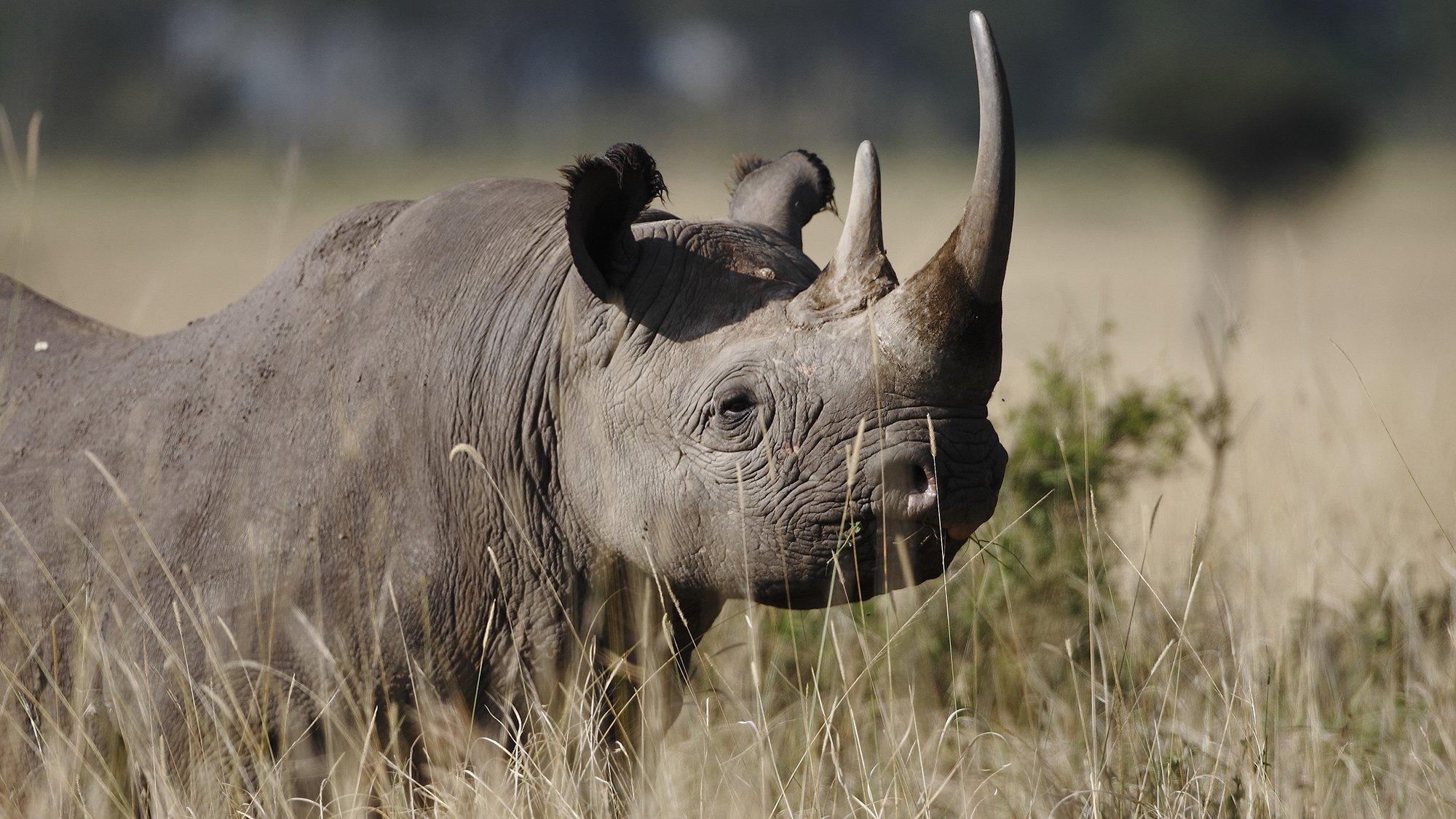
Rhino conservation is one of the most important stories in Tsavo West National Park. The park has long been associated with the Ngulia Rhino Sanctuary, which was established to protect the endangered black rhinoceros.
However, the conservation landscape has changed significantly. In December 2025, Kenya officially opened the expanded Tsavo West Rhino Sanctuary, covering approximately 3,200 square kilometres. The expanded sanctuary incorporated the former Ngulia Rhino Sanctuary and other protected rhino habitat, creating the world’s largest rhino sanctuary according to Kenya Wildlife Service.
The expanded sanctuary brought together a founder population of approximately 200 black rhinos, strengthening Tsavo West’s importance as a major black rhino conservation landscape.
This makes rhino conservation an increasingly important part of the Tsavo West story, alongside traditional game viewing.
Birds in Tsavo West National Park
Tsavo West is an important destination for bird watching in Kenya, with Kenya Wildlife Service currently listing more than 600 recorded bird species in the park.
The park’s varied habitats, water sources, woodland and volcanic landscapes create suitable conditions for a remarkable variety of resident and migratory birds.
Birding highlights may include:
- Corncrake
- Basra reed warbler
- Secretary bird
- African finfoot
- Golden pipit
- Eastern black-headed oriole
- River warblers
- Marsh warblers
- Red-backed shrike
- Starlings
- Hornbills
- Sunbirds
- Rollers
- Raptors
- Weavers
The Ngulia Hills are particularly significant for bird migration and ringing. Bird researchers and ringers have historically visited the area during the migration periods, making Tsavo West an important location for ornithological research and birdwatching.
Poacher’s Lookout
Poacher’s Lookout is one of the scenic viewpoints in Tsavo West National Park.
The elevated position provides broad views across the surrounding wilderness and allows visitors to appreciate the scale and rugged character of the park.
The viewpoint is traditionally associated with its former use by poachers to observe wildlife movements. Today, it is a scenic attraction where visitors can appreciate the landscape and watch wildlife from an elevated position.
Another notable viewpoint is Roaring Rocks, which provides panoramic views over parts of the Tsavo wilderness.
Lake Jipe
Lake Jipe lies on the southeastern edge of the Tsavo West ecosystem along the Kenya–Tanzania border.
The lake is an important wetland and birding destination and supports a range of aquatic wildlife.
Its presence adds another habitat to Tsavo West’s already diverse combination of savannah, woodland, volcanic terrain, rivers and freshwater springs.
Lake Jipe is particularly interesting for travellers who want to combine traditional game viewing with birdwatching and scenic exploration. Kenya Wildlife Service lists the lake among the park’s major attractions.
Chaimu Hill and the Five Sisters
The volcanic landscape of Tsavo West includes several striking hills and geological formations.
Chaimu Hill is a volcanic feature that provides an elevated perspective over the surrounding landscape and is associated with hiking and exploration.
The Five Sisters are another distinctive group of volcanic hills that create a memorable backdrop for photography and game viewing.
These geological attractions are part of what distinguishes Tsavo West from many of Kenya’s more open savannah parks.
Things to Do in Tsavo West National Park
There are several activities that can be enjoyed during a Tsavo West safari.
Game Drives
Game drives are the main way of exploring Tsavo West National Park.
The park’s extensive network of tracks provides opportunities to search for elephants, buffaloes, lions, leopards, rhinos, giraffes, zebras, antelopes and other wildlife.
Early morning and late afternoon game drives are particularly popular because wildlife is generally more active during the cooler parts of the day.
Visit Mzima Springs
A visit to Mzima Springs is one of the essential experiences in Tsavo West.
The combination of clear water, lush vegetation, hippos, crocodiles and birdlife creates a completely different environment from the surrounding dry volcanic landscape.
Bird Watching
With more than 600 recorded bird species, Tsavo West is an important destination for bird enthusiasts.
Birding can be combined with game drives, walks and visits to water sources such as Mzima Springs and Lake Jipe.
Nature Walks and Hiking
Tsavo West offers opportunities for walking and exploring some of its volcanic and scenic areas.
Chaimu Hill and other designated areas provide opportunities to experience the landscape away from the safari vehicle, subject to current park regulations and guide requirements.
Visit the Rhino Conservation Area
The expanded Tsavo West Rhino Sanctuary provides an opportunity to learn about Kenya’s ongoing efforts to protect black rhinos and restore their habitat.
Photography
The combination of elephants, volcanic hills, lava flows, springs, wildlife and spectacular sunsets makes Tsavo West an excellent destination for wildlife and landscape photography.
How to Get to Tsavo West National Park
 Tsavo West National Park can be reached by road or air.
Getting to Tsavo West by Road
Road travel is the most common way of reaching Tsavo West, particularly for travellers combining the park with Nairobi, Mombasa, Amboseli or Tsavo East.
The Nairobi–Mombasa A109 highway provides access to the park, with the Mtito Andei area being one of the principal approaches. The park can also be reached through routes toward Chyulu, Maktau, Ziwani and other access points depending on the safari itinerary.
A road safari also makes it possible to combine Tsavo West with other major destinations in southern Kenya.
For example, a safari itinerary can combine:
Nairobi → Amboseli National Park → Tsavo West National Park → Tsavo East National Park → Mombasa
This route creates a diverse Kenya safari combining Mount Kilimanjaro views, volcanic landscapes, elephants, rhinos, savannah wildlife and the Kenyan coast.
Getting to Tsavo West by Air
If you prefer to fly, you can access Tsavo West using the park’s network of airstrips. Air access is particularly useful if you are starting from Nairobi or connecting from one of the other parks.
Airstrips serving the Tsavo West area include Kilaguni, Finch Hattons and other airstrips serving different parts of the park, subject to current flight schedules and operating arrangements.
Tsavo West National Park Gates
Tsavo West has several access points serving different sections of the park. Depending on your safari route, commonly referenced access points include:
- Mtito Andei Gate
- Chyulu Gate
- Maktau Gate
- Ziwani Gate
- Man-Eaters Gate
- Jipe area access
The most suitable gate depends on where your safari is coming from and which part of Tsavo West you intend to explore.
Travellers combining Amboseli and Tsavo West may use an approach through the Chyulu side, while travellers travelling between Nairobi and Mombasa commonly approach through the Mtito Andei corridor.
Best Time to Visit Tsavo West National Park
Tsavo West can be visited throughout the year, but the safari experience varies with the seasons.
The dry seasons are generally favourable for wildlife viewing because animals tend to gather around permanent water sources and vegetation becomes less dense.
The wetter periods bring greener landscapes, seasonal water sources and excellent conditions for birdwatching and photography.
For travellers primarily interested in wildlife, the dry periods can make animals easier to locate. For photographers and birdwatchers, however, the greener season can provide a different and equally interesting experience.
Where to Stay in Tsavo West National Park
Tsavo West has a range of accommodation options, from luxury safari camps and lodges to campsites.
Below are some of the popular safari lodges, camps and other accommodation options to consider:
- Kilaguni Serena Safari Lodge
- Finch Hattons Luxury Safari Camp
- Severin Safari Camp
- Ngulia Safari Lodge
- Kamboyo Guest House
- Public campsites
- Special campsites
The choice of accommodation depends on your budget, preferred safari style and the area of the park you want to explore. Staying inside or close to the park allows visitors to maximise their time for early morning and late afternoon game drives.
Tsavo West National Park Safari
A Tsavo West National Park safari offers a different experience from many of Kenya’s better-known wildlife destinations. Instead of only open grassland, visitors encounter volcanic landscapes, lava flows, forested hills, springs, rocky ridges and expansive savannah.
The park is particularly suitable for visitors who want to experience the following:
- African Big Five wildlife viewing
- Elephant encounters
- Rhino conservation
- Volcanic scenery
- Birdwatching
- Mzima Springs
- Historical sites
- Scenic viewpoints
- Photography
- Kenya safari and beach holidays
Tsavo West can also be combined with Tsavo East for a more comprehensive Tsavo safari, allowing travellers to experience the contrasting landscapes and wildlife habitats of both parks.
Tsavo West vs Tsavo East National Park
Tsavo West and Tsavo East National Park are separate national parks but form part of the wider Tsavo Conservation Area.
Tsavo West is particularly known for its volcanic scenery, Mzima Springs, lava flows, rhino conservation areas, hills and scenic viewpoints.
Tsavo East, meanwhile, is famous for its vast open landscapes, red-earth scenery, large elephant herds and major attractions such as the Galana River, Yatta Plateau and Aruba Dam.
Visiting both parks provides a more complete experience of the enormous Tsavo ecosystem.
Why Visit Tsavo West National Park?
Tsavo West National Park combines wildlife, geology, history and scenery in a way that makes it one of Kenya’s most distinctive safari destinations.
Its major attractions include Mzima Springs, Shetani Lava Flow, the Tsavo West Rhino Sanctuary, Lake Jipe, Ngulia Hills, Chaimu Hill, the Five Sisters, Poacher’s Lookout and Roaring Rocks.
The park is also an important refuge for elephants, lions, buffaloes, leopards, rhinos and many other species.
For travellers planning a Kenya safari from Nairobi or the coast, Tsavo West offers an opportunity to experience a vast and relatively wild landscape while remaining accessible by road and air.
From the legendary Man-Eaters of Tsavo and the volcanic Shetani Lava Flow to the crystal-clear waters of Mzima Springs and the expanding black rhino conservation landscape, Tsavo West National Park offers far more than a conventional game drive. It is a destination where wildlife, geology, history and spectacular scenery come together in one of Kenya’s most remarkable wilderness areas.